Storage Containers
Insulated Container Financing
Finance insulated shipping containers for passive temperature control, produce storage, and pharmaceutical holds. Loans from $50k. Fast approvals, Flexible-credit review available.
Insulated containers are the quieter sibling of the reefer box. No compressor, no shore-power hookup, no refrigerant lines. Just spray-foam or polyurethane panel insulation built into the container walls, floor, and ceiling, thick enough to maintain temperature variance within a workable band for a defined dwell time. For operators who need controlled-temperature storage but don't need active refrigeration running 24 hours a day, insulated containers are often the right answer at a meaningfully lower cost than a reefer fleet.
The financing picture for insulated containers is cleaner than reefer financing in one important way: no integrated machine means no machine-failure risk to factor into the collateral value. The box is the asset, full stop. That simplicity works in your favor when we structure the deal. We fund insulated containers from fifty thousand dollars up, on application-only terms up to around four hundred thousand dollars, with funding inside one to two weeks.
What Makes an Insulated Container Different
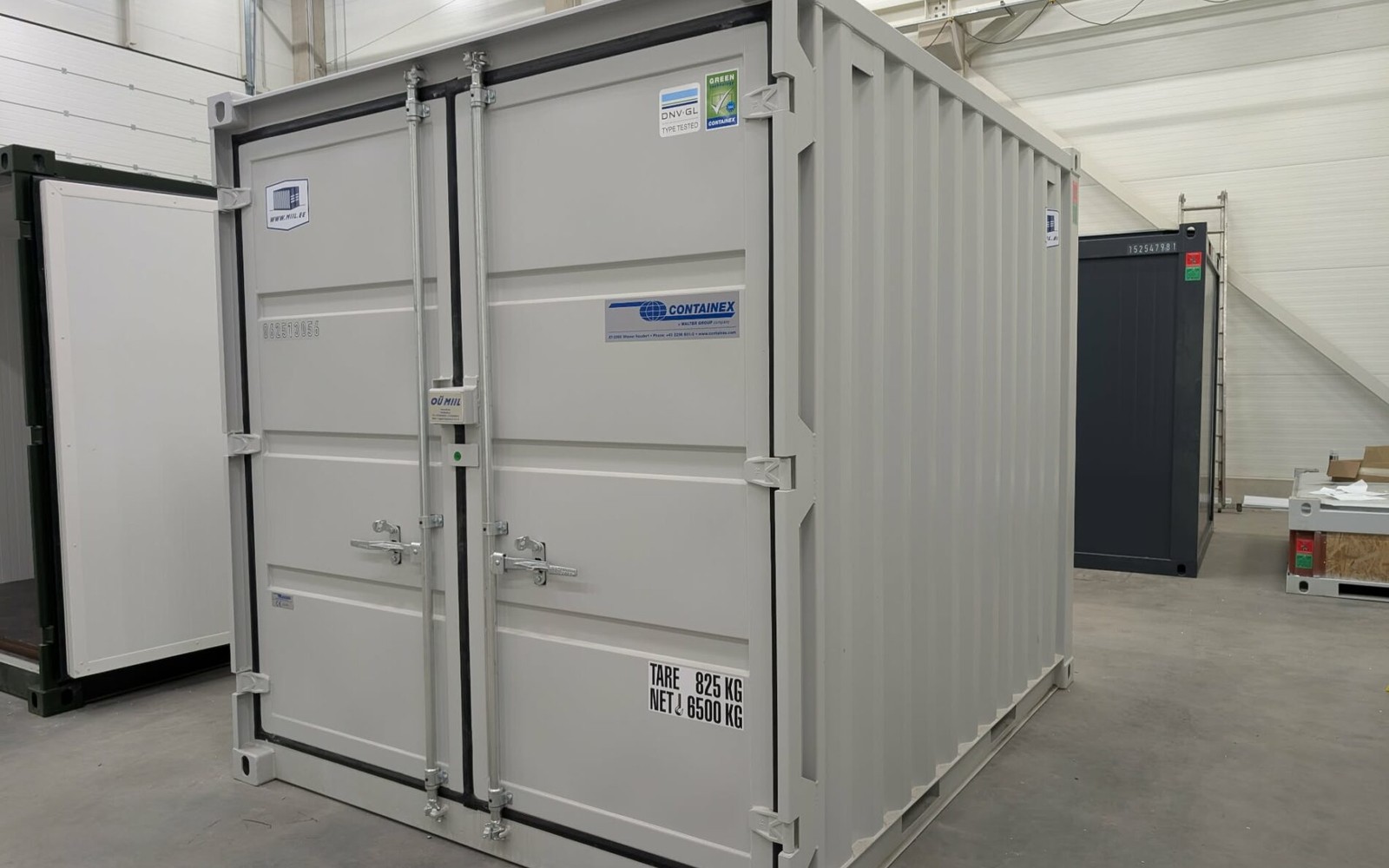
Standard shipping containers are built for structural integrity and weatherproofing, not thermal management. The corrugated steel walls conduct heat readily. An insulated container addresses this by lining the interior walls, ceiling, and floor with closed-cell foam or rigid insulation panels, typically 2 to 4 inches thick depending on the application. The result is a box that holds an internal temperature considerably more stable than an uninsulated container when the exterior ambient temperature swings.
The key distinction is passive versus active temperature management. An insulated container slows thermal exchange but doesn't actively maintain a temperature setpoint. If you load it with product at 35 degrees Fahrenheit and it's a 95-degree day outside, you'll gain some time before the interior warms. A reefer holds setpoint indefinitely. Insulated containers work best for applications where product doesn't need to stay below a fixed threshold for days on end, or where you're using ice, dry ice, or gel packs inside the container to extend the cold hold.
Common purchase configurations include 20-foot and 40-foot standard-height units, and 40-foot high-cubes where interior height matters for pallet stacking. Some buyers add vents or vapor barriers to the insulated build for specific commodities. Modified insulated builds sometimes include interior lining or food-grade coatings for direct food contact applications. A modified container with insulation and a food-safe interior is a distinct asset from a standard insulated box, and both are financeable through us.
Who Uses Insulated Container Financing
Agricultural operations in regions with extreme seasonal temperature swings are consistent buyers. A farm or co-op that needs to hold harvested grain, seeds, or produce within a temperature band for weeks or months at a time, without running active refrigeration around the clock, finds insulated containers cost-effective. Farms and agricultural operators often buy multiple units and place them near processing facilities or storage pads where there's no electrical infrastructure for reefers.
Breweries and wineries use insulated containers for wine and beer storage during conditioning periods, for barrel rooms, and for seasonal inventory overflow when the production building runs out of temperature-stable space. The passive thermal management is often sufficient for fermentation temperature ranges, and without an active refrigeration machine there's no mechanical noise and no power draw to worry about.
Disaster recovery and emergency response operations stock insulated containers for medication and supply storage where active power may not be available. Disaster recovery companies pre-positioning insulated storage assets across a region need fast financing that doesn't require a lengthy bank underwrite. We close those deals quickly.
Credit Profile and Documentation
Insulated container purchases follow the same credit framework as any container transaction with us. Solid business credit and demonstrated cash flow is the ideal picture. non-prime credit profiles are considered; if your credit history has some rough patches we look at the cash flow in your bank statements and the underlying business strength to compensate.
For transactions up to about four hundred thousand dollars, we work on an application-only basis. No full tax return package, no multi-year audited financials. Above that threshold, three months of bank statements and basic business financials are the typical requirement. Startups are harder but not impossible; startup financing options for newer operations can sometimes be structured with additional down payment or a stronger co-signer.
If your business went through a difficult period recently and credit took a hit, the bad credit container financing path is worth reviewing before you assume you don't qualify. We've funded plenty of operators who've been through a rough patch and are on the other side of it.
Questions from buyers
What to know before you send the file.
Clear answers on structure, documentation, timing, and equipment eligibility.
Can I convert a standard shipping container to an insulated one and finance the modified version?
Yes, financed after conversion. The modification needs to be complete before we fund it as an insulated container. If the conversion is being done by a third party, we can structure the deal to pay out to the modifier on completion. Finished modified containers are evaluated on their post-conversion condition and utility.
Does the insulation type (spray foam vs. panel) affect financing terms?
Not directly. Both spray foam and rigid panel insulation are accepted. What matters is the documented insulation specification and the resulting thermal performance. Spray foam bonded to the structural walls is considered part of the container asset. Loose or removable insulation is less straightforward to evaluate, so panel systems bonded to the interior are generally preferable for collateral documentation.
Can I finance an insulated container that I'm going to use as a cold-storage unit with added ice or CO2?
Yes. How you manage temperature inside the container after purchase doesn't affect the financing. Insulated containers financed through us are yours to use as your operation requires, including active supplemental cooling.
What's the typical depreciation curve on an insulated container?
Insulated containers depreciate modestly faster than standard dry containers because the insulation can degrade over time (UV exposure, moisture infiltration at seams). Well-maintained units with intact seals hold value reasonably well. We factor expected residual value into term length when structuring loans.
I need four insulated containers for a farm project. Is four units enough to finance?
It depends on the per-unit cost. Our floor is fifty thousand dollars total. If four units at current insulated-container pricing clears that floor, we can finance the group as a single transaction. If the total is below fifty thousand, we're probably not the right source for that particular deal.
Container quote desk
Ready to price Insulated Container Financing?
Send the unit list, seller quote, delivery location, and target timing. We will organize the financing request around the equipment.