Financing Options
Equipment Loan
Finance new or used storage containers with a straight equipment loan. Own the box outright, build equity, deduct depreciation. $50k minimum, funding in about two weeks.
A 20-foot conex on a dealer lot runs anywhere from $3,500 used to over $6,500 one-trip. Stack ten of them for a rental fleet, add a couple of 40-foot high-cubes for a construction client, and you are looking at a real capital outlay fast. Banks see 'movable personal property' and reach for the file drawer. We see steel inventory with a resale floor and a working asset that earns rent from the day it hits your yard.
An equipment loan puts the box in your name immediately. You make fixed monthly payments, build equity in the unit from day one, and own it free and clear at the end of the term. No residual to negotiate, no mileage-equivalent condition clauses, no lessor pulling the box back because you modified it for a client. It is the cleanest structure for buyers who plan to hold the iron.
We fund container equipment loans from $50,000 up, with a sweet spot running about $100k to $500k for operators buying in quantity. Terms run two to seven years depending on unit age, condition, and your credit profile. New one-trip boxes and certified cargo-worthy units qualify for the longest terms. Heavily modified or wind-and-watertight-only units need a container-by-container review around condition and resale path. We work with non-prime credit, and application-only approval is available up to roughly $400,000 for buyers who would rather not pull full financials on a smaller transaction.
How a Container Equipment Loan Closes
The process runs in three steps. First, we review your application and, for deals above roughly $400,000, three months of business bank statements. Turnaround on initial credit decisions is typically one to three business days. Second, we confirm the equipment: unit count, size, condition grade, seller, and delivery or pickup logistics. Third, funds wire to the seller and you take title. Start to funded is usually one to two weeks for straightforward transactions.
What we look at: time in business, overall credit profile (personal and business), cash flow from bank statements, and the nature of the equipment. Container buyers who run a portable storage rental operation or a construction contracting business tend to have the kind of recurring revenue picture that makes approval cleaner. Startups and thin-file borrowers can still close, particularly on smaller deals, and we have specific programs for startup business financing and for buyers with damaged credit.
Down payment is typically 10 to 20 percent on standard transactions, though application-only approvals sometimes require more. Used unit purchases often carry slightly higher down payment requirements than one-trip or new equipment.
New One-Trip Boxes vs. Used Cargo-Worthy Units
The loan terms you get depend partly on what you are buying. Here is how lenders typically treat the two grades.
- One-trip containers: Made-in-China (typically CIMC or Singamas production), one ocean crossing, near-new condition. Rated cargo-worthy. Longest available terms, lowest down payment, best rates. If you are standing up a new container fleet, one-trip units give you the cleanest collateral story.
- Cargo-worthy used units: Grade CW means structurally sound, watertight, and still rated for stacking and transport. Typically 10 to 15 years old. Good collateral, solid residual value. Terms of three to five years are common.
- Wind-and-watertight (WWT): Not rated for cargo transport, usually sold for stationary storage. Shorter terms, higher down, because the secondary market is thinner. Still financeable for the right buyer and use case.
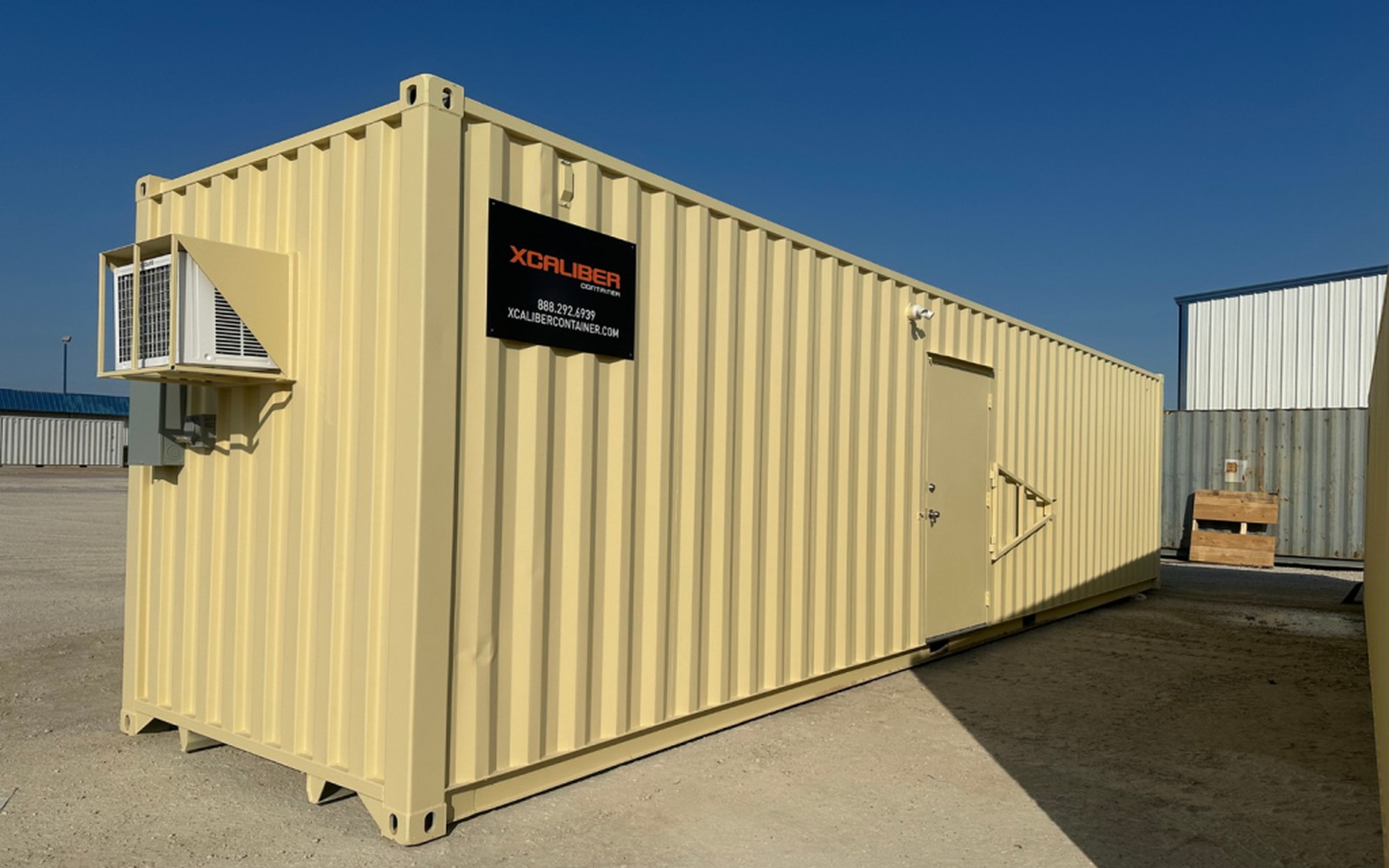
- Modified containers: Office containers, modified units with cut openings, rollup doors, or HVAC, and container guard booths are evaluated individually. The modification usually adds value for the specific buyer but narrows the resale pool.
Rates, Terms, and What Drives the Number
We do not publish a rate card because no two deals land at the same number. What moves the rate: credit tier, time in business, equipment age and grade, loan-to-value, and term length. A seasoned operator with A credit buying one-trip 40-foot high-cubes will see a materially different number than a two-year-old company buying a stack of WWT 20-footers. Both can close. The terms just differ.
What you can count on: fixed payments for the life of the loan, no variable rate risk, and a clear payoff schedule. Many buyers use the Section 179 deduction or bonus depreciation to write down the full purchase price in year one, which changes the after-tax cost of the loan significantly. That is a conversation to have with your accountant, not us, but it is a real factor in the rent-vs-buy decision.
If you want to compare structures before committing, look at how an equipment lease handles the same transaction. A lease preserves cash differently, has different tax treatment, and may suit buyers who cycle through units frequently. A loan suits buyers who accumulate and hold.
Questions from buyers
What to know before you send the file.
Clear answers on structure, documentation, timing, and equipment eligibility.
Can I finance a private-party container purchase, not just dealer inventory?
Yes. We fund private-party transactions regularly. You will need the seller's information, documentation of the unit's condition grade, and confirmation of a clean title or bill of sale. Private-party deals sometimes take a day or two longer to close while we verify the equipment, but the loan structure is the same.
Does the loan cover delivery and modification costs, or just the box price?
The loan is secured by the container itself, so the core collateral is the unit. Some lenders will soft-cost modifications into the loan if they add demonstrable value. Delivery is typically a cash item on your side, though we can sometimes structure a slightly higher loan amount to cover logistics on larger fleet purchases. It depends on the deal.
My business is two years old and my credit score is in the low 600s. Can I still get approved?
Two years in business with a credit score in the 600s is B-credit territory, not a hard no. We have programs for non-prime borrowers. Expect a higher down payment, possibly shorter terms, and a rate that reflects the risk. On deals under $400,000 you may qualify application-only, which keeps the process fast. Bring three months of bank statements and let the cash flow do some of the talking.
What happens if I want to sell one unit out of a five-container fleet mid-loan?
That requires a partial release, which is a conversation with your lender. Some equipment loan structures allow it for a partial paydown; others require you to pay off the loan in full and refinance the remaining units. We can structure fleet loans with this scenario in mind upfront if you know you will be rotating units.
Is there a prepayment penalty if I pay the loan off early?
Prepayment terms vary by lender and deal structure. Some loans have a flat prepayment penalty, others use a yield-maintenance formula, and some have no penalty at all. We make sure you know the prepayment terms before you sign, so there are no surprises if you decide to exit the loan early or refinance.
Container quote desk
Ready to price Equipment Loan?
Send the unit list, seller quote, delivery location, and target timing. We will organize the financing request around the equipment.